
©GETTY IMAGES/DIGITALVISION/THINKSTOCK
What do today’s professionals want most: a day at the gym, or a day at the beach? Wellness programs, or time away from the office? It depends on whom you ask, it seems, because recent research revealed a disconnect between chief financial officers and workers on today’s most in-demand perks.
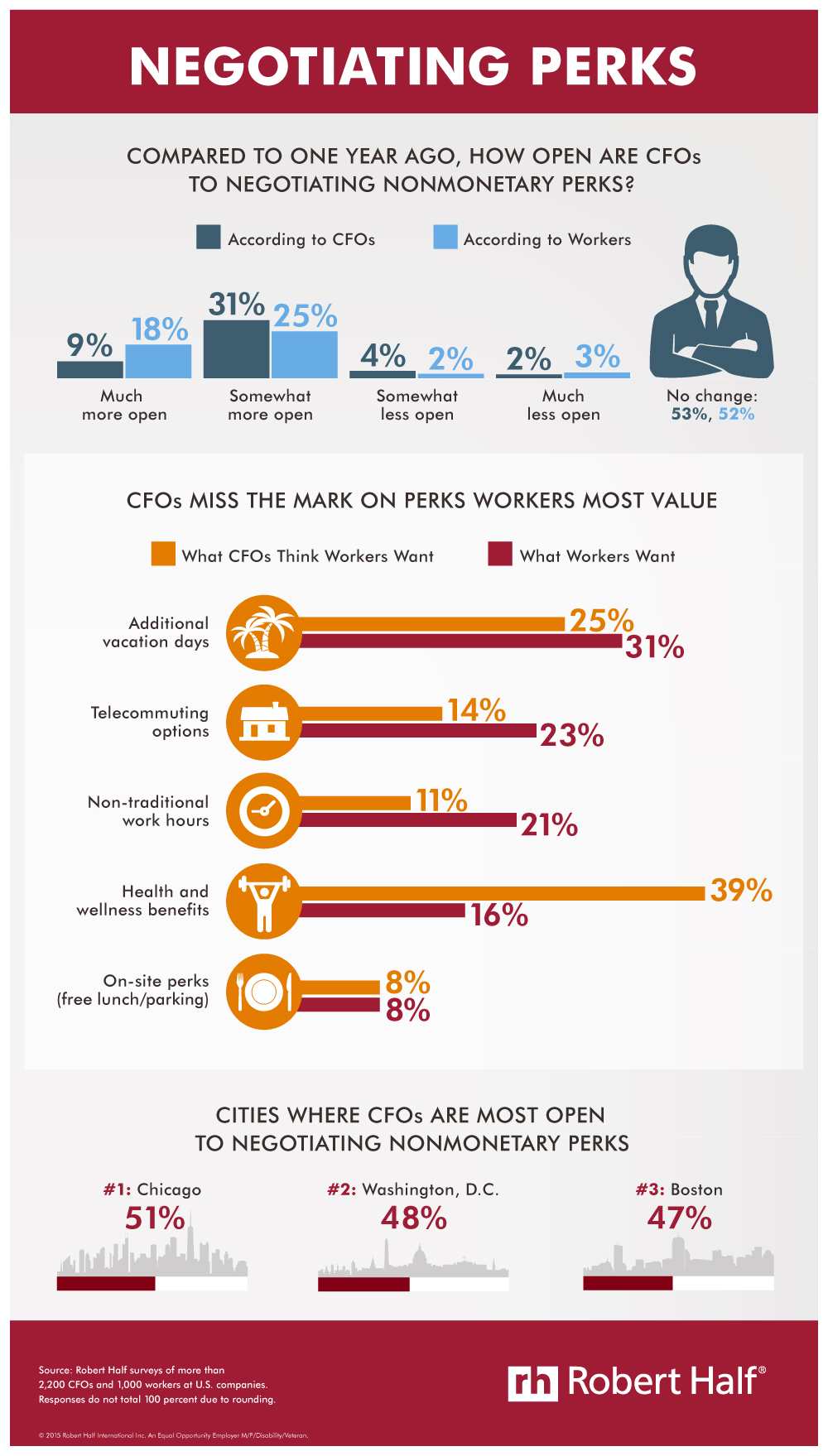
In the Robert Half survey, CFOs most commonly reported employees’ top choice would be health and wellness benefits. Workers, however, said they most highly prize additional vacation days.
One area in which the two groups agree: Nonmonetary perks are increasingly up for negotiation. To hire and retain accounting and finance professionals with in-demand skills, an employer needs to provide the benefits they desire most.
So, which perks are most highly sought?
Most valued perks
Remote work arrangements followed vacation days as employees’ most desired perks, with non-traditional work hours not far behind. The take-home message is clear: Benefits that enable employees to achieve better work-life balance make a difference in their job satisfaction.
This is not to say professionals don’t appreciate offerings like subsidized gym memberships, free parking and on-site cafeterias. They do. It’s just that if given a choice, your employees probably prefer the gift of more time.
By enhancing the work-life balance perks your organization offers, you’re telling your team you realize — and respect — they have a life outside the office. These benefits are not all one-sided: Employees who can exercise more control over their schedule often have greater loyalty to an employer than those who have to stick to set hours.
As for extra vacation days, some managers may feel they can’t afford the disruption and loss of productivity that comes with this perk. However, additional paid time off can actually lead to a boost in productivity. By taking longer or more frequent breaks, your workers will be more refreshed, creative and prepared to tackle tough projects.
Explaining the disconnect
Why did surveyed CFOs think workers cared about wellness benefits the most when it ranked fourth among employees? Perhaps healthcare is top of mind among executives with the Affordable Care Act and its ramifications on health insurance and premiums.
It could also be that many employers simply fail to initiate a conversation with their staff regarding the benefits they want. Likewise, workers are often reluctant to speak up about their wish lists.
Which perks do your employees want?
There’s no need to be a mind reader. Here are easy and efficient ways to discover which nonmonetary perks your staff value and which ones they could do without:
- Via an anonymous survey, ask employees to rank their favored perks. Give them space to add their own suggestions and comments, too. Online tools that are free and easy to use are available to help you conduct your research.
- During performance reviews, talk to your team about which current perks they like, as well as the benefit they would ask for if they could choose anything. Use this approach especially with top performers you cannot afford to lose.
- Don’t forget prospective employees. In interviews and negotiations, look for themes in the perks job candidates request.
Make this an ongoing effort. Your employees’ wants and needs change over time, as do your company’s resources.
Nonmonetary perks are an important but sometimes overlooked part of an organization’s recruitment and retention efforts. In today’s hiring environment, it’s increasingly important to be proactive about offering the benefits in-demand financial professionals seek. Tim Hird is the executive director of Robert Half Management Resources.